
Nepal Telecom Now Lets Users Get a New Prepaid eSIM Online Without Visiting an Office
Nepal Telecom’s new online prepaid eSIM system is a practical digital-service upgrade that can save users a branch visit and make eSIM adoption easier in Nepal.

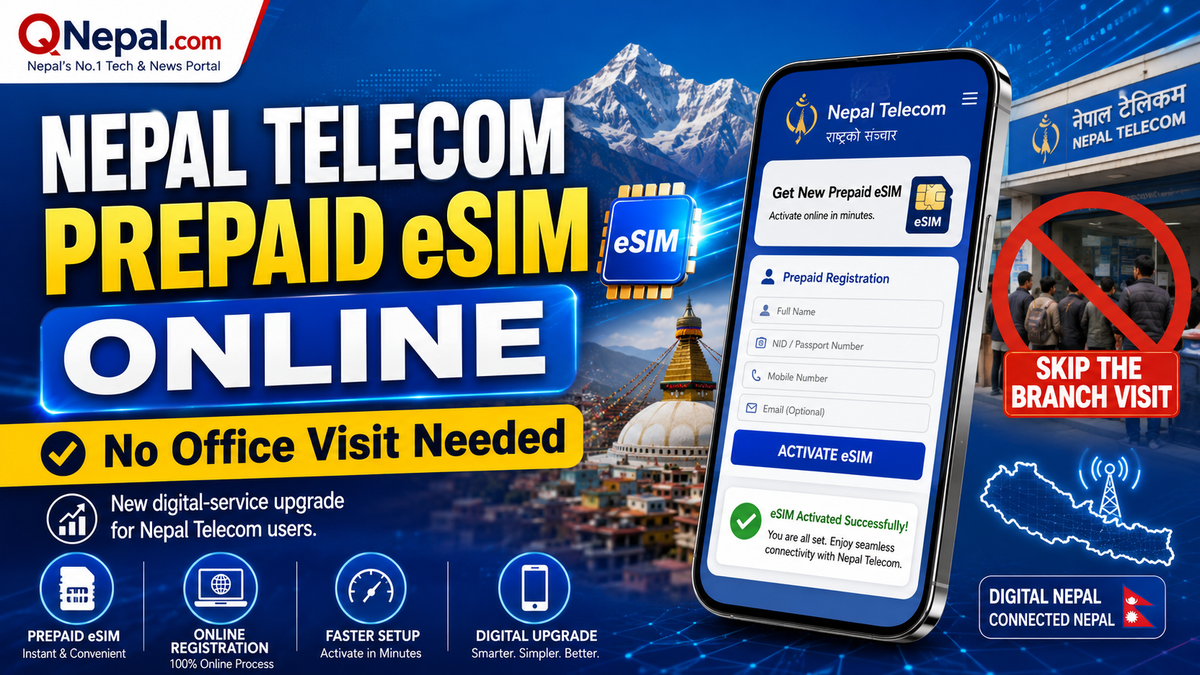
Nepal Telecom has launched a new online prepaid eSIM service that allows users to get a new prepaid eSIM from home instead of visiting a customer service counter. For many people, that may sound like a small convenience update. In practice, it is one of the more useful consumer-facing digital service improvements from a major public telecom operator in Nepal in recent days.
According to reporting by TechPana and corroborating information visible through Nepal Telecom’s own eSIM portal and related guidance, users can now go to esim.ntc.net.np, choose the prepaid eSIM option, submit their details, pay digitally, and receive a QR code to activate the eSIM on a compatible device.
The same broader online flow also supports physical SIM to eSIM conversion and digital KYC-related steps, making the system more than just a one-off launch page.
Why this matters in Nepal
This matters because telecom digitisation in Nepal often moves slower than users would like. Even basic SIM-related tasks have traditionally required paperwork, manual verification, and an office visit. Nepal Telecom’s new portal reduces that friction for at least one important part of the process.
That has several practical benefits:
- Less dependence on physical service centres: users outside major urban areas may save time and travel.
- Faster onboarding for compatible phones: people buying eSIM-ready phones can set up service more conveniently.
- Better fit for newer devices: eSIM is increasingly relevant as more iPhones, Samsung flagships, Pixel devices and some premium mid-range phones support it.
- A visible step toward digital self-service: it shows Nepal Telecom is slowly shifting more user processes online instead of treating every SIM change as a branch-only task.
For Nepali readers, the key point is simple: this is not just about one SIM format. It is about whether big everyday digital services are becoming easier to access without standing in line.
What users can do through the new system
Based on the currently available information, Nepal Telecom’s online eSIM setup now supports these kinds of actions:
- Get a new prepaid eSIM online
- Convert an existing physical SIM to eSIM
- Submit customer details and KYC information digitally
- Pay through digital payment methods
- Receive and scan a QR code to activate the eSIM
That combination is important because many users do not just want a new number. They want the easier option of moving their existing number from a plastic SIM card to an embedded one.
What an eSIM actually changes
An eSIM, or embedded SIM, removes the need for a removable physical SIM card. Instead, the mobile profile is installed digitally on the phone. For users, the benefits are usually convenience rather than dramatic new features.
In Nepal, eSIM has become more relevant for a few reasons:
- some imported phones, especially certain US-market iPhones, depend heavily on eSIM
- users who switch phones or networks increasingly expect digital activation options
- eSIM reduces the hassle of damaged or misplaced physical SIM cards
- it fits the broader transition toward app-based and portal-based telecom account management
That said, eSIM is still not universal. Users need a device that actually supports eSIM, and installation remains dependent on compatible phone settings and proper verification.
Things users should keep in mind
Before trying the service, users should keep a few practical points in mind:
- Your phone must support eSIM. Many budget phones still do not.
- You will still need to complete identity verification. Online does not mean no KYC.
- Activation depends on scanning the QR code correctly. Less tech-comfortable users may still need help.
- Service quality will depend on how smoothly the portal works in real use. Launching a portal is one thing; keeping it reliable is another.
So this is a meaningful step, but not the end of the story. The real test will be whether ordinary customers can complete the process smoothly without failed uploads, payment issues, or delayed approvals.
Why QNepal chose to publish this
QNepal does not need to cover every routine telecom update. This one clears the bar because it has clear immediate value for users in Nepal and reflects a broader shift in how digital public-facing services are delivered. It also comes at a time when eSIM support matters more as newer smartphones enter the market and more users expect online activation instead of branch visits.
If Nepal Telecom can make this process work reliably, it will be a small but real example of the kind of practical digitisation Nepali users actually notice.
Bottom line
Nepal Telecom’s new online prepaid eSIM system is not flashy, but it is useful. It saves a service-centre trip for some users, makes eSIM more accessible, and signals that a major telecom operator is finally moving another real customer process online. In Nepal’s digital-service landscape, that is worth paying attention to.
Sources: TechPana report on Nepal Telecom’s online prepaid eSIM launch; Nepal Telecom eSIM portal and related public guidance reviewed for confirmation.